When scaffolds return from a site, the job isn’t over — in fact, for many hire businesses, that’s when the real stress begins. Scaffold returns often come with missing parts, damaged components, or unexpected extension requests to new locations. If left unmanaged, these issues can seriously hurt your bottom line, erode trust, and create accounting nightmares.
In this article, we dive into the three biggest return-related challenges faced by scaffold hire businesses — and how Scaffolder, the local scaffolding management system, helps you turn chaos into control.
1. Damaged Scaffolds – Who Pays the Price?
Nothing stings more than seeing your scaffolds come back bent, broken, or unusable. It’s common for joints to crack, boards to split, or steel components to be mishandled on rough construction sites.
The impact of this is that:
-
Your scaffold rental business loses usable inventory.
-
Your scaffold rental business incurs replacement costs.
-
Your scaffold rental business’ next job may be delayed due to shortages.
-
And if there’s no system in place to track and bill for damages — your business absorbs the cost.
How Scaffolder helps:
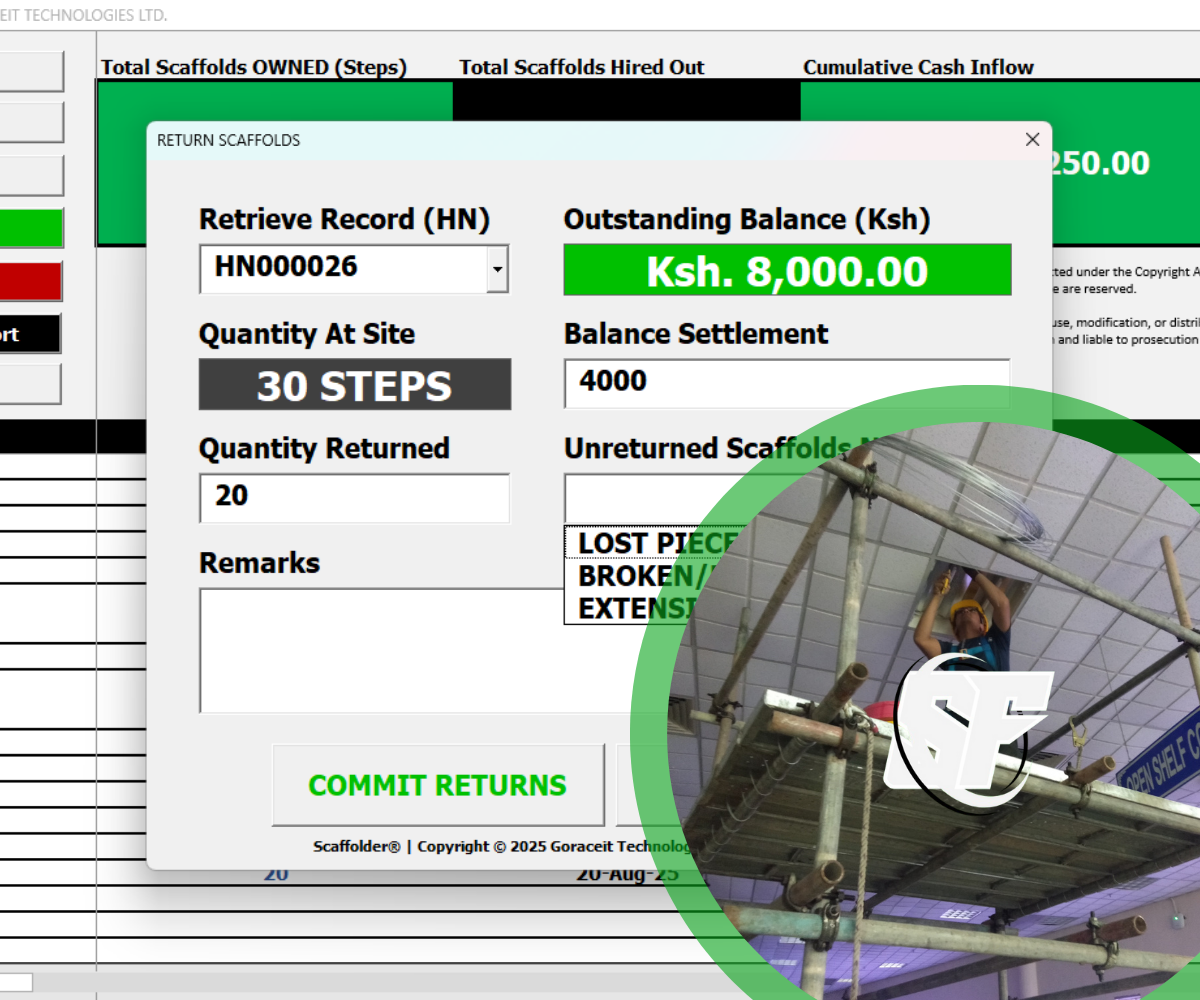
Scaffolder logs each scaffold unit dispatched and returned, allowing you to mark items as “Damaged on Return.” You can attach photos, notes, and even cost estimates. The system then logs it as a damage report linked to the client’s record — making it easy to recover costs or deduct from deposits professionally and transparently.
2. Missing Scaffolds – Silent Losses That Add Up
Sometimes it’s not what comes back — it’s what doesn’t. Scaffolds go missing during site transitions, get left behind, or are sometimes misappropriated entirely. Without a clear way to track who took what, and when, it’s almost impossible to claim or recover losses.
The impact to your scaffold rental business is that:
-
Your inventory records become unreliable.
-
You unknowingly carry costs for items that are long gone.
-
You risk billing disputes with clients — or avoid the conflict entirely, losing money in silence.
How Scaffolder helps:
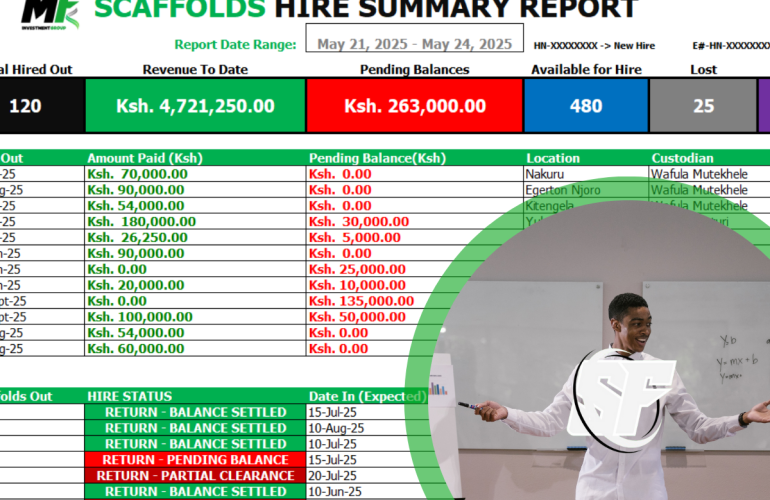
Every scaffold dispatch in Scaffolder includes a detailed item list tagged to the client and project site. Upon return, Scaffolder highlights any discrepancies — including missing pieces. You can flag lost items and generate a loss claim statement, complete with valuation. It gives you the documentation you need to pursue compensation confidently and fairly.
3. Extensions & Transfers – The Hidden Cost Traps
Sometimes a client wants to extend a scaffold hire — but at a new site. Without a system in place, these requests often get communicated informally (via calls or WhatsApp), and tracking what was extended, where, and for how long becomes blurry.
The impact of this approach to your scaffold rental business:
-
You miss out on additional billing for the extended duration.
-
Transfers go undocumented, leading to confusion or disputes.
-
You lose visibility of where your scaffolds physically are.
How Scaffolder helps:
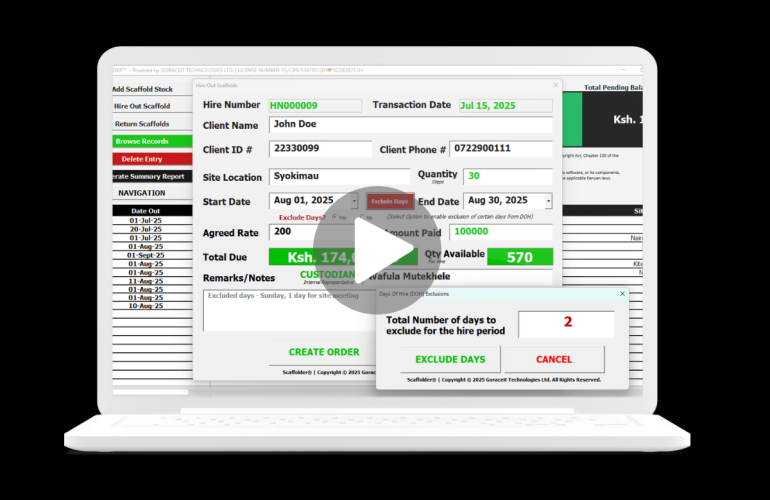
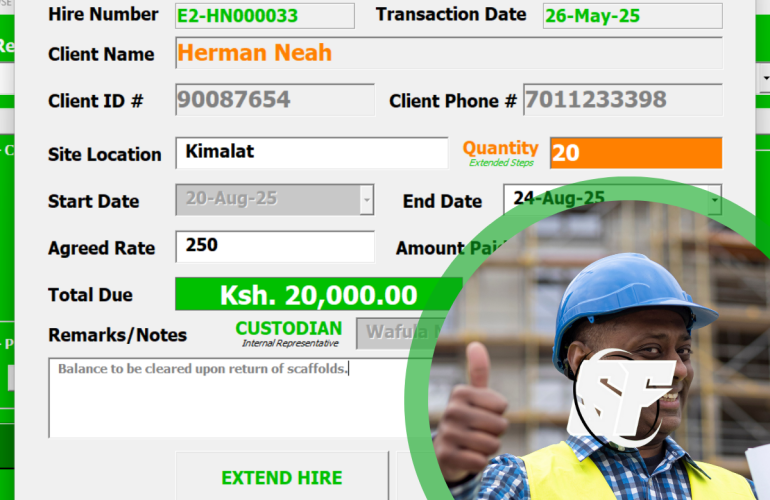
Scaffolder allows clients (or your team) to log extension requests and site transfer approvals directly in the system. Each transfer is timestamped and linked to the ongoing hire, and billing continues until the actual return is recorded. You get visibility of the new site, extension duration, and updated billing — all in one place.
Final Thoughts: Protect Your Inventory, Revenue, and Sanity
For scaffold rental businesses, returns are not just a formality — they’re a financial checkpoint. Every missing pipe, damaged board, or undocumented extension is a potential leak in your revenue. The longer these issues go unchecked, the more they erode your business stability.
That’s why Scaffolder exists — to help you track, recover, and protect your scaffolds and your money. Whether it’s through damage logs, loss claims, or automated billing for extensions, Scaffolder gives you control where it matters most.
Ready to stop the silent losses?
Try Scaffolder today and manage your returns like a pro.
👉 DM us for a walkthrough. (support@goraceit.co.ke)